
NGX Banking Sector Outlook: Why Banks Dominate Turnover and What to Watch Next
By Market Formula Editorial Team / October 2026
Introduction
Financial services drove roughly half of NGX trading value in recent weeks, yet the NGX Banking Index has fallen 6.62% in October . The dominant sector is now also the one under the most pressure.
This is the central tension in the current NGX banking sector outlook: banks are the most traded stocks on the exchange, but they are also leading the correction. Understanding why requires separating structural facts from cyclical noise.
In the week to October 9, the financial services sector traded 2.005 billion shares worth N82.92 billion—73.84% of volume and 52.39% of value . Access Holdings, Zenith Bank and UBA alone accounted for 37.56% of volume and 31.92% of value .
This NGX banking sector outlook breaks down why banks dominate turnover, what has changed in the macro environment, how earnings and dividends stack up, and what investors should watch next.
Let’s examine the NGX banking sector outlook with clarity and strategic discipline.
1. The Numbers: Banks Lead Turnover and Lead the Pullback
Market Levels
| Measure | Level | Date |
|---|---|---|
| NGX All-Share Index | 247,539.73 (−0.33% week; third weekly fall) | October 16 |
| NGX Banking Index | 2,532.47 (−3.15% week) | October 16 |
| NGX Banking Index | 2,493.34 | October 20 |
| Banking Index, October to date | −6.62% | October 16 |
| Banking Index, year to date | +67.07% | October 16 |
| Market capitalisation | ₦159.67 trillion | October 20 |
Turnover Data
| Week | Financial Services Share | Total Activity |
|---|---|---|
| Week to October 9 | 73.84% volume / 52.39% value | 2.005bn shares worth ₦82.92bn |
| Following week | 65.31% volume / 49.92% value | 1.659bn shares worth ₦98.09bn |
Two cautions on reading these figures. “Financial services” is wider than banks, so it overstates pure bank share. And the 67% year-to-date gain is real but now sits beside a sharp October drawdown, so entry price matters far more than the headline.
       ┌────────────────────────────────────────────────────────┐
       │   NGX BANKING SECTOR OUTLOOK – TURNOVER VS PERFORMANCE │
       └───────────────────────────┬────────────────────────────┘
                                   │
         ┌─────────────────────────┼─────────────────────────┐
         ▼                         ▼                         ▼
  [ TURNOVER ]              [ YTD RETURN ]             [ OCTOBER ]
  73.84% of volume          +67.07% YTD                −6.62% MTD
  52.39% of value           (as of Oct 16)             (correction)
  Access/Zenith/UBA         Still strong               Profit-taking
  = 31.92% of value                                    and repricing
2. Why Banks Dominate: Three Forces, and One That Has Faded
1. Recapitalisation Re-Rated the Sector But That Phase Is Over
The CBN’s recapitalisation deadline was March 31, 2026. By March 6, the CBN said 30 of 33 banks had met their new minimum capital requirements . The Banking Index then rose 22.1% in July alone, from 2,070.11 to 2,527.59.
The deadline is now history, so it cannot explain today’s turnover. What remains is the structural effect: stronger balance sheets and larger share counts.
2. Large Share Counts and Tight Pricing Make Banks the Easiest Stocks to Trade
Access, Zenith and UBA routinely top the volume tables, which is why a handful of tickers can drive a third of weekly value. High liquidity attracts institutional order flow, which in turn reinforces liquidity—a self-reinforcing cycle.
3. Local Money Is Doing the Trading, Not Foreign Money
Foreign investors made up just 4.89% of NGX equity transactions in August 2026, the lowest of the year, with domestic investors close to 95% . Retail and domestic institutions, not offshore funds, set turnover.
The Faded Force: Foreign Participation May Return
FTSE Russell reclassified Nigeria to Frontier Market status from September 21, 2026, after reviewing the move to T+1 settlement. 31 Nigerian stocks entered its Frontier index, including GTCO, Zenith Bank, MTN Nigeria, Dangote Cement, Stanbic IBTC, First HoldCo, Nestlé Nigeria, Nigerian Breweries, Presco and Aradel Holdings .
Index-tracking funds buy the most liquid names first, and banks are among them. However, one data point complicates the story: the CBN reports $6.31 billion of net foreign portfolio inflows for January to August, while NGX data show foreigners selling more shares than they bought. The two measures cover different assets—the CBN figure includes bonds and money-market instruments.
3. What Changed: Lower Rates, Softer Inflation, and a Bigger Tax Bill
The “high rates plus dollar assets” story that drove bank earnings is weakening. This is a critical part of the NGX banking sector outlook.
Rates
On September 22, 2026, the CBN cut the policy rate by 350 basis points, from 26.5% to 23.0%, and reset the standing-facilities corridor to +50/−300 basis points . Most analysts had expected a hold. Lower yields on government securities can reduce bank treasury income.
Inflation
Headline inflation fell to 14.63% in September from 15.39% in August; core inflation was 12.95% . Four consecutive monthly declines support the disinflation narrative.
Naira
The official market has held a narrow band around ₦1,330 per dollar through October, with the parallel market roughly ₦40 to ₦50 weaker. A steadier naira removes the currency-trading windfall banks booked while it was falling.
Tax
The Nigeria Tax Act 2025, in force since January 1, 2026, raised effective tax bills. Zenith’s tax expense rose 121% to ₦206.84 billion in H1 .
4. Earnings and Valuation: Cheap on Paper, Uneven Underneath
The average price-to-earnings ratio of 12 listed banks rose from 4.38x in 2025 to 5.83x, and average price-to-book from 0.86x to 1.26x—still below several African peers. Cheap multiples reward investors only if earnings hold, and the latest results are mixed.
| Bank | Latest Reported Earnings | Dividend Position | Recent Price |
|---|---|---|---|
| Zenith Bank | H1 2026: pre-tax ₦637.6bn (+1.9%), after-tax ₦430.8bn (−19.1%) | Interim ₦1.50, up 20% | ~₦123.50 |
| GTCO | Q1 2026: pre-tax ₦302.89bn (+0.88%); after-tax ₦218.13bn (−15.42%) | Interim ₦1.00; FY2025 total ₦12.76 | ₦122.50 on Oct 20 |
| Access Holdings | Q1 2026: pre-tax ₦272.21bn (+22.19%); EPS ₦3.69 (−24.49%) | No FY2025 dividend; H1 interim uncertain | ₦27.80 on Oct 20 |
| First HoldCo | H1 2026: pre-tax ₦653.5bn, highest of five banks compared | Not reviewed | Fell 5.09% on Oct 6 |
What the Numbers Actually Say
Zenith shows the net effect. Its H1 pre-tax profit rose 1.9% to ₦637.6 billion, but profit after tax fell 19.1% to ₦430.8 billion. It booked a ₦284.9 billion FX trading loss against a ₦268.5 billion gain a year earlier, and gross earnings fell 24.6% to ₦1.90 trillion.
GTCO’s Q1 shows the same pattern: pre-tax profit up marginally, after-tax profit down 15.42% due to a 100% increase in taxation to ₦84.76 billion.
Access Holdings’ Q1 is the clearest example of dilution. Profit before tax grew 22.19%, but EPS fell 24.49% after the capital raise. That gap is the share-count effect investors must price in.
I could not find Access Holdings’ or GTCO’s audited H1 figures. Both had sought extensions pending regulatory approval, so check their latest filings on the NGX before acting.
A reminder for the “best banking stocks” crowd: a low P/E is not a recommendation. Zenith’s after-tax profit fell despite a rising pre-tax line, and that gap is the kind of detail a headline multiple hides.
5. Dividends: The Dates That Matter This Week
This is where the NGX banking sector outlook becomes tactical.
| Bank | Dividend | Qualification Date | Payment Date | Yield |
|---|---|---|---|---|
| Zenith Bank | ₦1.50 interim | October 23, 2026 | October 30, 2026 | ~1.2% at ₦123.50 |
| GTCO | ₦1.00 interim | October 12, 2026 | October 20, 2026 | ~0.73% at ₦137 |
Zenith’s ₦1.50 interim is a 20% increase over the ₦1.25 paid in H1 2025, with total payout of approximately ₦61.6 billion . GTCO’s ₦1.00 interim was paid on the NGX on October 20, while London depositary-interest holders are paid in US dollars between November 3 and 6 at a rate GTCO will announce on October 23.
Access Holdings paid no dividend for FY2025, and management tied further payouts to curing a regulatory breach on foreign investment above a 10% threshold. Income investors should not assume an interim.
Since June 1, 2026, NGX trades settle on T+1 , so confirm with your broker the last day to buy before a qualification date. Register for e-dividend with the registrar, or the payment may be delayed.
6. For Diaspora Investors: Access, Currency, and Tax
Access
Non-resident Nigerians generally need a Non-Resident Nigerian Investment Account, a remotely obtained BVN, and a CSCS account opened through a SEC-licensed stockbroker. Requirements vary by broker. Keep records of your inbound transfer, since proof of capital importation supports later repatriation.
Currency
Shares trade in naira, so your dollar or sterling return is the share return minus any naira move. The official rate has sat near ₦1,330 per dollar in October, but a currency that is stable today can still move. Banks that earn in dollars no longer gain from a falling naira.
Dividend Tax
A 10% withholding tax is deducted at source on dividends. For non-residents, a treaty rate may apply, and you may owe tax where you live.
Capital Gains
The old flat 10% rate ended on December 31, 2025. Individual gains are now taxed at personal income tax rates, with sales exempt if proceeds are under ₦150 million and gains under ₦10 million . How this applies to non-residents is less clear, so take advice.
A Dollar Route
GTCO also trades in London through depositary interests and pays those holders in US dollars, which avoids the naira conversion on its dividend.
This is general information, not tax or investment advice.
7. What to Watch Next in the NGX Banking Sector Outlook
1. Q3 results. Analysts expected earnings releases to guide positioning, and the market has been trading ahead of them. Look at after-tax profit, impairments and cost-to-income, not pre-tax profit alone. Zenith’s cost-to-income ratio rose to 44.9% from 29.5%.
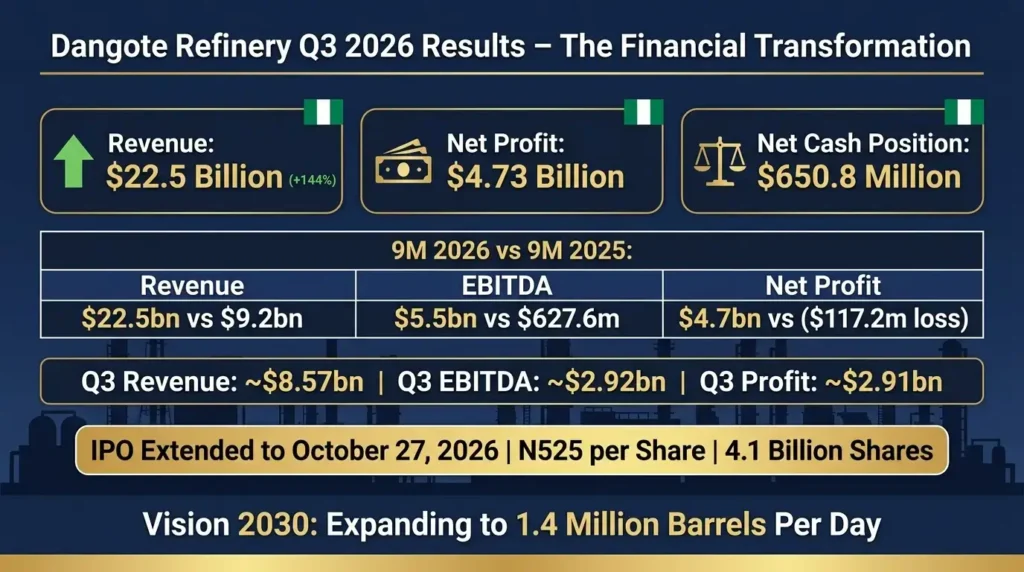
2. The Dangote refinery listing. The IPO of 4.1 billion shares at ₦525 was extended from October 13 to October 27, 2026 to accommodate growing investor interest . One broker’s indicative timetable points to allotment around November 11 and listing in early December. At a reported post-IPO value above ₦65 trillion against a market capitalisation near ₦160 trillion, the listing could pull money out of banks to make room. Treat the timetable as unconfirmed.
3. The next policy move. A further rate cut would pressure treasury income, while a pause after the 23% reset would signal comfort with current inflation.
4. Foreign participation. A rise above the 4.89% August share would show the FTSE reclassification is working.
8. Action Plan for Investors
Step 1: Separate turnover from performance.
Banks are the most liquid stocks on the NGX, but liquidity does not equal returns. The Banking Index is down 6.62% in October despite dominating volume.
Step 2: Focus on after-tax profit, not pre-tax.
Zenith and GTCO both showed pre-tax resilience masking after-tax declines due to higher taxes and FX losses.
Step 3: Watch dilution.
Access Holdings’ EPS fell 24.49% despite 22% PBT growth. Price the share-count effect.
Step 4: Track dividend qualification dates.
Zenith’s October 23 qualification date is the near-term catalyst. Missing it by one day forfeits the ₦1.50 payout.
Step 5: Confirm filings before acting.
Access and GTCO audited H1 figures were unavailable at the time of writing. Check the NGX portal.
Step 6: Consider the Dangote liquidity drain.
A mega-listing near ₦65 trillion could redirect institutional capital away from banks in the near term.
9. Final Summary & The Bottom Line
The NGX banking sector outlook is defined by a paradox: banks are the most traded stocks on the exchange, but they are also leading the correction.
text
  ┌──────────────────────────────────────────────────────────┐
  │      NGX BANKING SECTOR OUTLOOK – KEY TAKEAWAYS          │
  ├─────────────────────┬────────────────────────────────────┤
  │ Turnover Dominance  │ 73.84% of volume, 52.39% of value  │
  ├─────────────────────┼────────────────────────────────────┤
  │ October Performance │ Banking Index −6.62% MTD           │
  ├─────────────────────┼────────────────────────────────────┤
  │ YTD Performance     │ +67.07% (still strong)             │
  ├─────────────────────┼────────────────────────────────────┤
  │ Key Macro Shift     │ MPR cut to 23%, inflation 14.63%,  │
  │                     │ steadier naira                     │
  ├─────────────────────┼────────────────────────────────────┤
  │ Earnings Challenge  │ Zenith PAT −19.1%, GTCO PAT        │
  │                     │ −15.42%, Access EPS −24.49%        │
  ├─────────────────────┼────────────────────────────────────┤
  │ Dividend Catalysts  │ Zenith ₦1.50 (Oct 23 qual.),       │
  │                     │ GTCO ₦1.00 (paid Oct 20)           │
  ├─────────────────────┼────────────────────────────────────┤
  │ Key Risk            │ Dangote listing liquidity drain    │
  └─────────────────────┴────────────────────────────────────┘
The Bottom Line:
Banks dominate NGX turnover because they are liquid, numerous, and locally traded. But the NGX banking sector outlook is no longer a simple “buy the rally” story. Lower rates, softer inflation, a steadier naira, and higher taxes have changed the earnings math.
The +67% year-to-date gain is real, but it now sits beside a 6.62% October drawdown. Entry price matters. After-tax profit matters. Dividend dates matter. And the Dangote listing—if it lists near ₦65 trillion—could reshape liquidity flows across the entire exchange.
For more weekly NGX updates and strategy guides, explore our market trends and analysis archive.
Disclaimer: This article is general information, not personalised investment, tax or legal advice. All figures are from the sources cited below, verified as of October 21, 2026. Share prices move daily, so check live NGX data before trading. Where a number could not be confirmed (Access and GTCO audited H1 results, the Dangote IPO final subscription level), the text says so.